This article is based on an interview conducted with Jonathan Clark shortly before his passing on August 11. His reflections and the direct quotations included below represent his own words and experiences at the time of the conversation.
We are deeply grateful for the time, insight, and dedication Jonathan shared with the patient community, researchers, clinicians, and the EASYGEN project.
„As a patient advocate, an Inspire2Live representative, and a member of the EASYGEN Advisory Board, I bring my perspective as a patient into discussions about the future of CAR-T cell therapies. Having experienced both the challenges of a life-threatening cancer diagnosis and the impact of an innovative treatment, I try to connect scientific progress with the realities that patients and their families face.
My journey touches on many of the issues at the heart of EASYGEN’s work today, including access to treatment, the role of clinical research, and the importance of involving patients as active partners in innovation. Through my contributions, I seek to ensure that the patient voice remains an important part of these conversations.
I hope that the compassion, honesty, and commitment to helping others that guided my work will continue to have a lasting impact."
The following article shares Jonathan's story and reflects the experiences that shaped both his advocacy work and his contribution to EASYGEN.
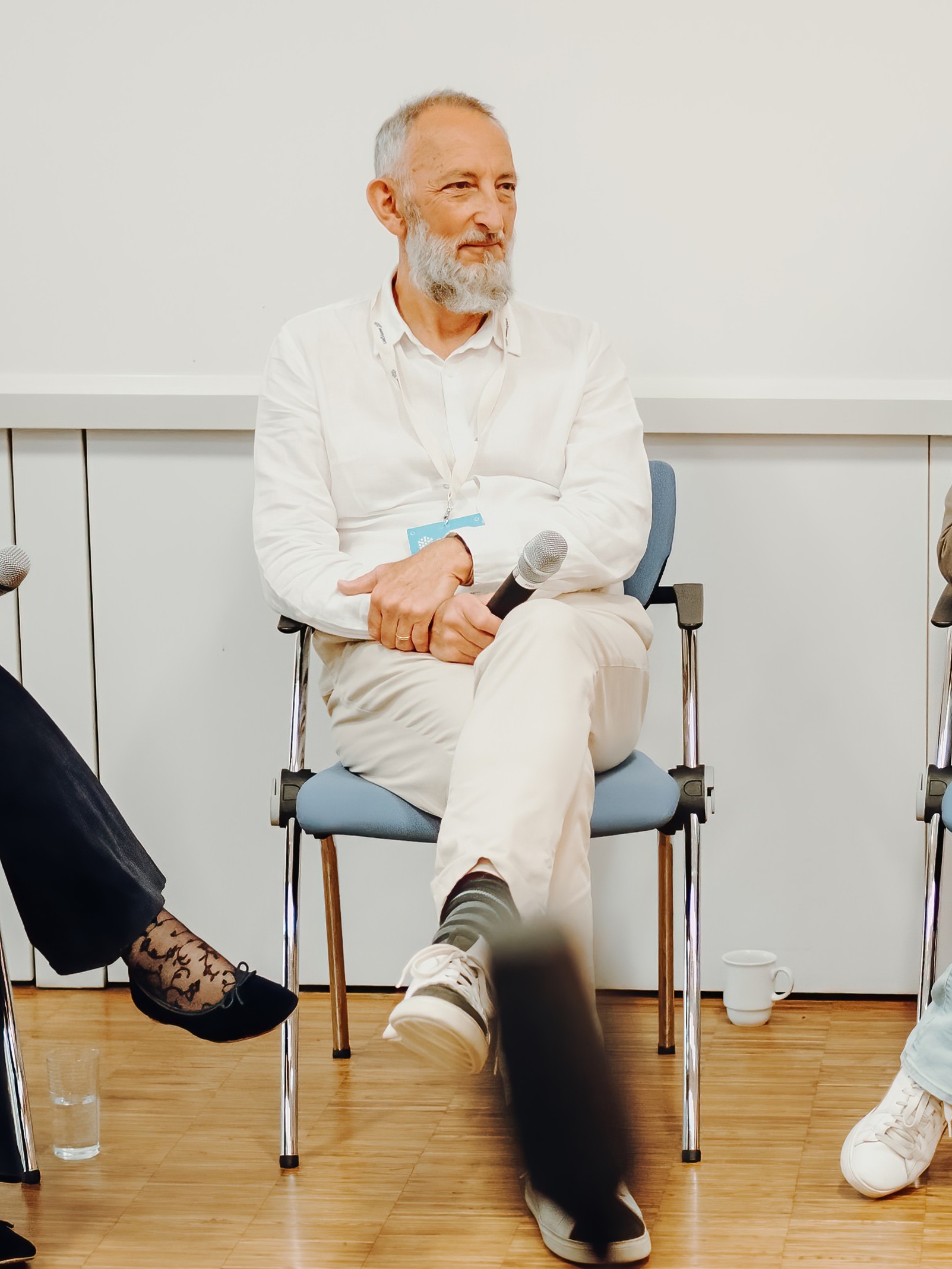
CAR-T cell therapy brought Jonathan Clark’s mantle cell lymphoma into remission and gave him almost eight additional years of life. In an interview conducted three weeks before his death, he reflected on what that time had meant to him and on the barriers that still prevent patients from accessing treatment.
Looking back on his journey, Jonathan reflected on the role CAR-T had played in his survival:
In the Interview, he described access to CAR-T as decisive in giving him another chance at life.
„My patient journey began in the summer of 2014, when I noticed a swelling around my neck and shoulder. At first, I assumed it was a goiter. My aunt, who was a nurse, encouraged me to seek medical advice. I had an ultrasound and soon realized that the swelling could be linked to cancer affecting my lymphatic system.
The period before I received my diagnosis was one of the darkest stages of my experience. I lay awake at night rehearsing goodbye conversations with my family and friends. The uncertainty was overwhelming, and the possibility that I might have a life-threatening illness seemed increasingly real.
Even before the diagnosis was confirmed, I found myself hoping that it would be lymphoma rather than metastatic cancer because lymphoma could at least be treated. When I learned that it was an especially aggressive form, knowing that a treatment might potentially give me another eight to ten years offered me a sense of hope.
I received the standard treatment available at the time: chemotherapy combined with the monoclonal antibody rituximab, followed by an autologous stem cell transplant.
The treatment was initially effective.
However, in 2017, only two years after the initial treatment, my mantle cell lymphoma returned.
The relapse came much sooner than I had expected, and I immediately understood that it was bad news. A newly approved drug, ibrutinib, temporarily pushed the disease back, but only for a few months. The lymphoma soon returned aggressively, and my condition deteriorated rapidly.
I was too ill to qualify for a donor stem cell transplant. Salvage chemotherapy remained the only available option, while the outlook became increasingly uncertain.
At that point, I was offered the opportunity to join a clinical trial for CAR-T cell therapy. I was 55 years old and not ready to die.
When my doctor first mentioned CAR-T therapy, I immediately began researching it. At the time, however, very little information was available. I found a Phase II clinical trial on ClinicalTrials.gov, only to discover that my hematologist had already identified the same study.
Looking back, I believe that timing, access, and circumstance all played a decisive role. The trial had only recently opened in Europe, and one of the participating centers happened to be my own hospital.
It was all about luck.
Access, timing, and circumstance came together at a moment when I urgently needed another treatment option. The therapy existed, the trial was recruiting patients in Europe, and the opportunity became available to me.
After my T cells were collected, I waited approximately six to eight weeks before receiving the final therapy product. I remember the waiting period more clearly than the exact timeline itself. To slow the progression of the disease, I received steroid treatment, which caused significant side effects. One night, I became convinced that I was going to die.
My experience showed me a reality that many patients face: even when a potentially life-saving therapy exists, the period between cell collection and treatment can be one of the most difficult parts of the journey."
CAR-T cell therapy brought Jonathan’s cancer into remission. At the time of the interview, he was still living with that remission.
„For me, remission meant everything. It transformed the way I experienced time, relationships, and everyday life. Simple routines such as waking up in the morning, feeding the cats, or enjoying my first cup of coffee took on a new significance. They became daily reminders of something I had once feared I might lose.
I came to describe cancer as an unwelcome gift. I would never have chosen the experience, but it fundamentally changed my perspective on life. My life after the cancer diagnosis was richer than it had ever been before, and I felt as though I was living a second life.
My experience of cancer and treatment taught me to feel grateful for the time and everyday moments I have regained.
Yet survival was only part of the story.
I believe that conversations about treatment success often overlook the psychological and long-term consequences of cancer. One long-term side effect is the risk of infections. I want to avoid surviving an incurable cancer and then dying of a stupid and preventable infection. So, I have to take care.
My everyday life required a constant balance between managing health risks and maintaining my quality of life. Avoiding travel, social events, and other potential risks might have been the safest option. But for me, survival also meant continuing to live fully.
My experience shaped the way I viewed innovation in healthcare. A therapy may extend life or even save it, but its impact remains limited if most eligible patients cannot access it.
If medicine can dramatically extend life, or even save it, but only for a small minority of patients who can access these therapies, is that really progress, or is it a new form of inequity?
That question became central to my advocacy work.
I frequently emphasized that access remains one of the greatest challenges associated with CAR-T therapies. Although the science has advanced rapidly, many patients around the world still struggle to access treatments that could potentially change the course of their disease.
I often speak about patients who continue to die while waiting for therapies that already exist. At the same time, I encourage people to look beyond cost alone and consider value."
By the time of the interview, CAR-T therapy had given Jonathan almost eight additional years of life. During those years, he continued to work, contribute to society, support others, and advocate for future patients.
„For me, the value of innovation could not be measured solely in financial terms. It could also be measured in opportunities, relationships, contributions, and time."
„A few days after receiving my CAR-T cells, I was admitted to intensive care. The experience was frightening and overwhelming. As I lay surrounded by machines, I made myself a promise: if I survived, I would tell my story to anyone willing to listen."
He kept that promise.
„Patient advocacy found me rather than the other way around. Invitations to speak at conferences allowed me to share the patient perspective, and I later became involved with the patient initiative Inspire2Live.
Through my advocacy, I focused on the issues that mattered most to patients: quality of life, equitable access to CAR-T therapies, and meaningful patient involvement in clinical-trial design.
I believe that patients bring a unique perspective to research and innovation. Our experiences can help researchers, clinicians, and policy makers better understand the realities of treatment, survivorship, and access to care. I always speak openly about my experiences because I believe that honest conversations could ultimately improve care for future patients."

„I carry this same openness into my role on the EASYGEN Advisory Board.
A key objective of EASYGEN is to simplify and decentralize the complex manufacturing process for CAR-T cell therapies, bringing production closer to hospitals and ultimately to patients.
Throughout the project, I contribute the patient perspective to discussions about access, quality, ethics, health economics, and future implementation strategies. Drawing on my experience, I seek to remind those involved that scientific progress must ultimately translate into real-world benefits for patients.
I also shared my experiences with consortium partners at the second EASYGEN General Assembly in Leipzig. In doing so, I hope to help connect scientific and technological development with the realities faced by patients living with life-threatening diseases.
My involvement reflects a principle that is close to the heart of EASYGEN and important to me: meaningful patient involvement is essential to developing innovative therapies that meet real-world patient needs.
My contribution therefore extends beyond sharing my personal story. I work to ensure that patient voices remain part of discussions about how future therapies should be developed, delivered, and made accessible."
„Throughout my journey, I maintained my faith in science.
From the moment I was diagnosed, I placed my trust in medical research and clinical care. Over time, I witnessed firsthand how rapidly the field evolved. A therapy that had once been experimental and available to me only through a clinical trial had become an approved treatment for multiple blood cancers, while research continues to explore its potential in additional indications.
I believe that CAR-T cell therapy will ultimately be remembered as a transformational breakthrough in cancer treatment. For me, harnessing the body’s own immune system to fight disease represents a fundamentally different way of thinking about cancer.
Yet I also believe that innovation alone is not enough.
Scientific progress must be accompanied by improved access if more patients are to benefit from advances in research. This conviction shapes both my advocacy work and my contribution to EASYGEN."
Through his participation in the project, Jonathan helped ensure that the patient perspective remained part of discussions about how innovative therapies could become more accessible, scalable, and available to those who need them.
His story remains a reminder that behind every scientific breakthrough are individuals and families searching for hope, time, and simply a chance to keep living.
In the interview, Jonathan returned to a message he had shared with audiences:
His contribution to EASYGEN leaves a clear challenge for the project: keep patients’ needs and voices present as new ways of developing and delivering CAR-T therapies take shape.

Interview was conducted by Brigitte Baas, Corporate Communication Fresenius SE