EASYGEN consortium meets for second General Assembly in Leipzig
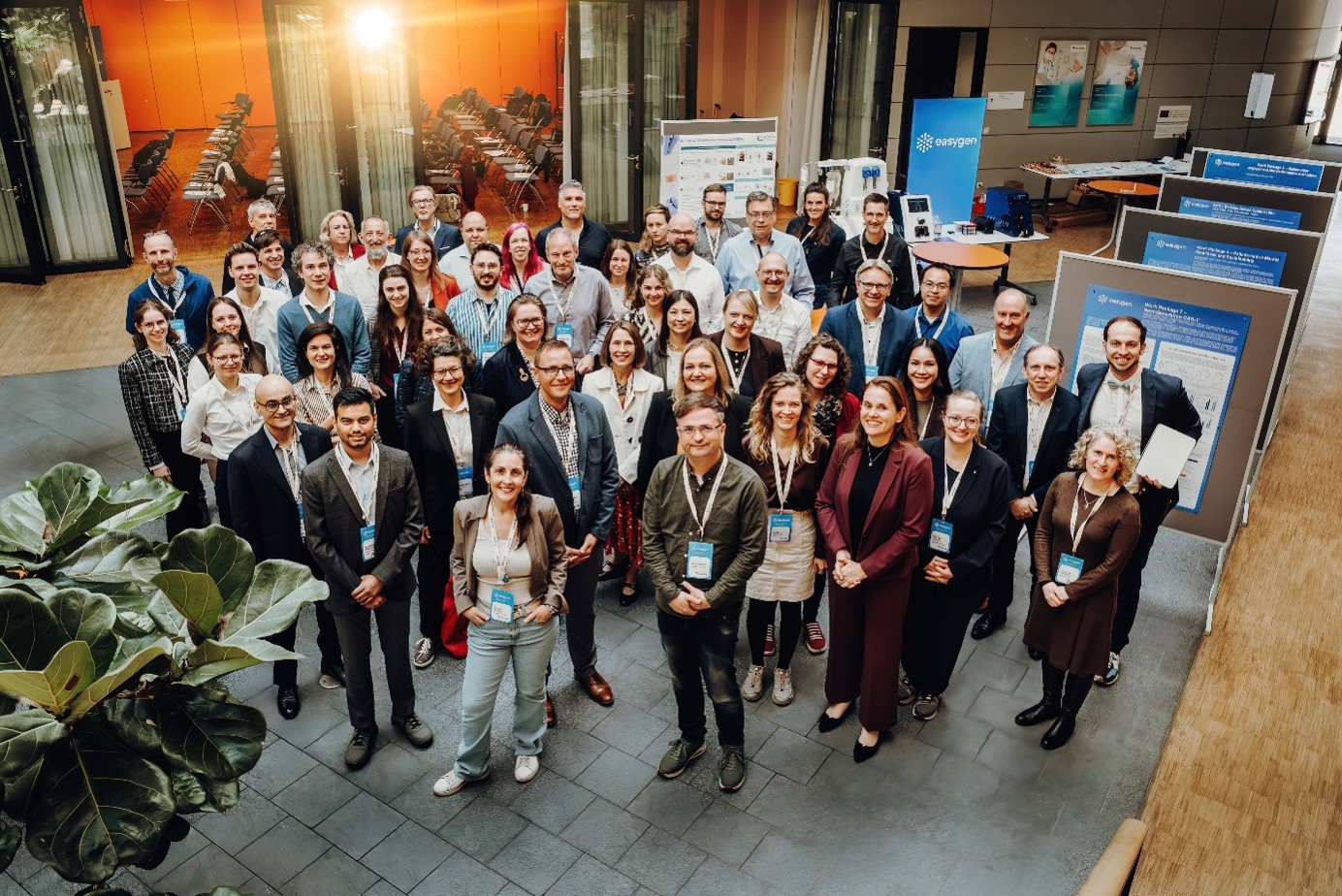
The EASYGEN consortium convened for its second General Assembly in Leipzig in April 2026, bringing together partners from across Europe to review progress, align next steps, and further strengthen collaboration on the path towards decentralized, hospital‑based CAR‑T manufacturing. Following the successful project kick‑off in 2025, the General Assembly marked a key transition point for EASYGEN: from project initiation to visible results and validated progress.
One year of progress: from concept to first results
During its first year, EASYGEN has built strong momentum across technology development, scientific visibility, and communication activities, laying the foundation for future translational impact. Early proof‑of‑concept activities validated key workflow components, while targeted dissemination efforts significantly increased the project’s visibility within the cell and gene therapy (CGT) community. In parallel, first project outputs have progressed toward scientific publication, marking an important step from planning to tangible results.
Notably, initial proof‑of‑concept results in Work Package 7 demonstrated the successful development of the CueSelect approach, including the integration of a cell selection workflow aligned for research use and small‑scale selection. These results represent an important technical milestone toward automated, point‑of‑care CAR‑T manufacturing.
Beyond technical development, EASYGEN has strengthened its position within the CGT landscape, gaining visibility among field experts, existing partners, and new collaborators, as well as increasing awareness among potential competitors. This growing recognition has been supported by the successful launch of communication activities, including a first LinkedIn campaign with continuously increasing reach and engagement.
Deliverables and milestones: on track and on time
Over its first year, EASYGEN has delivered all planned outputs on time and established a strong operational and scientific foundation for the project. Core project structures are fully in place, early technical and methodological results have been generated, and key activities across management, research, and communication have progressed as planned.
Important milestones along the project roadmap are on track, reflecting the consortium’s ability to translate a complex, interdisciplinary ambition into coordinated action. Governance and advisory structures have been successfully established, communication and dissemination activities have been launched, and first results are already feeding into scientific and technical follow‑up work.
Together, these achievements demonstrate the consortium’s strong alignment and effective collaboration across its partners, providing a robust basis for the next project phases focused on further development, validation, and real‑world integration.
Exchange, alignment, and cross‑functional collaboration
Building on these achievements, the General Assembly offered space for in‑depth exchange across all work packages. Presentations and poster sessions enabled partners from academia, industry, healthcare, and patient advocacy to discuss progress, dependencies, and interfaces between technical development, regulatory strategy, workflow integration, and patient access.
This cross‑functional collaboration remains central to EASYGEN’s approach: ensuring that innovation is not developed in isolation, but in close alignment with clinical reality, regulatory feasibility, and real‑world hospital workflows.
Looking ahead
With a strong first year behind it, the second General Assembly in Leipzig reaffirmed the consortium’s shared commitment to the project’s core mission: increasing patient access to CAR‑T therapies by bringing automated, efficient manufacturing directly into hospitals.
As EASYGEN moves into its next phase, the consortium builds on validated proof‑of‑concepts, completed deliverables, and established governance structures — creating a robust platform for further technological development, clinical integration, and long‑term impact.
The consortium would like to extend a sincere thank you to the Fraunhofer Institute for Cell Therapy and Immunology (Fraunhofer IZI) in Leipzig for hosting the second EASYGEN General Assembly and for providing an excellent environment for productive discussions and exchange.
Industry & hospitals
Academic, clinical & non‑profit partners
Patient advocacy