
Current and future CAR-T care processes are mapped, analyzed and enhanced under real-world constraints. Through expert interviews, and KPI definition, partners will build detailed process diagrams and quantitative baselines to inform discrete-event simulation models. These models will be calibrated, used for “what-if” analyses to develop resource concepts (layout, staffing, logistics) and contribute to the performance evaluation in WP3. In parallel, qualitative co-creation workshops with clinicians ensure that user insights drive the design of optimized workflows, SOPs, and training materials.
WP4 defines and validates patient eligibility criteria to identify new cohorts who stand to benefit from the modular CAR-T device, leveraging clinical expertise and data analytics to model anticipated outcomes. A comprehensive market and competitor analysis maps current trends, barriers to entry, and growth projections, informing optimal positioning within healthcare systems. Finally, insights from WP2 are used for exploitation and sustainability strategies that outline clear commercialization pathways, partner engagement, and scalable roll-out plans to ensure long-term integration and impact of the innovation.
A robust regulatory roadmap is crafted for both the CGT proof-of-concept platform and the modular CAR-T procedure. Early engagement with Notified Bodies and competent authorities ensures that device classification, pre-clinical testing, and evolving regulations are addressed in real time. A detailed European regulatory landscape analysis across EU countries (starting with Germany, Spain) informs consultation with TÜV, PEI, EMA, and other agencies, while comprehensive GMP documentation - including validation plans, risk assessments, and supplier qualification - lays the groundwork for compliant manufacturing in WP6.
Same-day CAR-T production is established and refined through the comparison of novel vector and gene-editing strategies with classical methods. Both processes are then standardized to ensure consistent, clinical-scale use. It develops cutting-edge analytical assays - leveraging CRISPR off-target profiling, 3D ex vivo efficacy screens, and cytokine-release monitoring - to qualify edited cells for safety and potency. Finally, it conducts paired comparisons of the new rapid workflow versus traditional ex vivo culture to demonstrate equivalence or superiority in product quality.
Simulated onboarding workflows in hospital settings serve to pilot the point-of-care CAR-T platform, while also generating SOPs, training materials, and quality-management documents to assess personnel, infrastructure, and documentation requirements. Guided by insights from WP2 and WP3, this WP then conducts dry runs across partner sites, gathering usability feedback to iteratively refine device deployment and clinical processes while preparing for a clinical trial. Finally, interoperability tests validate data interfaces between the device, digital twin, and hospital IT systems, and a clinical study protocol is drafted alongside a comprehensive final report outlining logistics, user insights, and regulatory considerations.
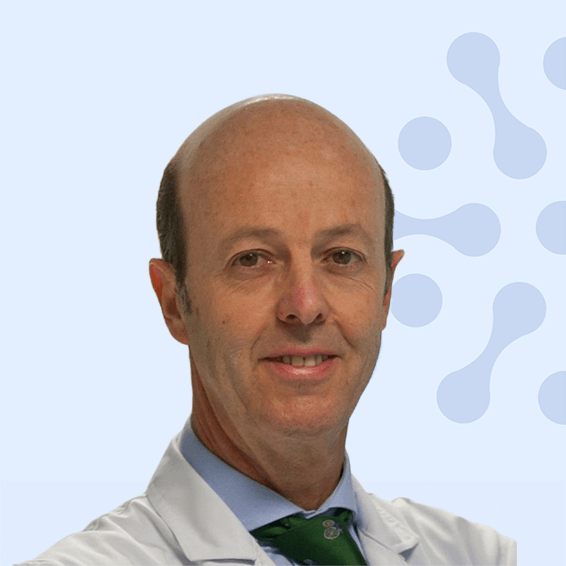
Felipe is a physician-scientist specializing in hematology, oncology, and regenerative medicine. He leads research at CIMA Universidad de Navarra and the Clínica Universidad de Navarra, directing both the Hematology and Cell Therapy Department and heading programs in Hemato-Oncology and Regenerative Medicine. With over 400 peer-reviewed publications and coordination of more than 50 national and international research grants, he has made substantial contributions to translational hematology and cell therapy, particularly in CAR‑Tand stem cell treatments. Felipe has mentored over 30 PhD students and postdoctoral researchers over the course of his career.

Susana earned her MD (1992) and PhD (1998) in Medicine from the Universidad de Navarra. She is a Clinical Research Associate in the Cell Therapy Area and the Immunology and Immunotherapy Department at the Clínica Universidad de Navarra. As the Production Manager of the GMP-certified laboratory accredited by the Spanish Medicines Agency, she has extensive expertise in the design and implementation of clinical trials, as well as in the manufacturing of immunotherapy products.
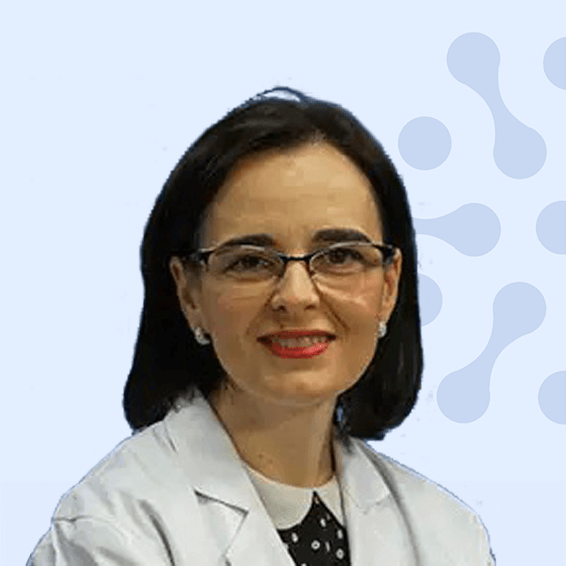
Ascensión holds a Bachelor's degree (1996) and a PhD (2001) in Biology from the Universidad de Navarra. She is a researcher in the cell therapy area and the Immunology and Immunotherapy Department at the Clínica Universidad de Navarra. Her expertise lies in developing innovative immuno therapy strategies for cancer treatment. Additionally, she serves as the Quality Control Manager for the GMP-certified laboratory, where she oversees the development and execution of clinical trials and the production of immuno therapy products.

Juan earned his Bachelor's degree (2000) and PhD in Biology (2005) from the Universidad de Navarra. Since 2010, he has been a researcher in the Hemato-Oncology Program at Cima Universidad de Navarra and is responsible for the Immune Therapies Laboratory. His scientific work focuses on the development of safer and more efficient CAR-T therapies for hematological malignancies,combining cutting-edge genome editing and non-viral technologies. He also investigates the molecular mechanisms governing CAR-T cell function and toxicity, using multiomic approaches at the single-cell level and spatial transcriptomics.
