
Current and future CAR-T care processes are mapped, analyzed and enhanced under real-world constraints. Through expert interviews, and KPI definition, partners will build detailed process diagrams and quantitative baselines to inform discrete-event simulation models. These models will be calibrated, used for “what-if” analyses to develop resource concepts (layout, staffing, logistics) and contribute to the performance evaluation in WP3. In parallel, qualitative co-creation workshops with clinicians ensure that user insights drive the design of optimized workflows, SOPs, and training materials.
A PESTEL analysis and expert interviews map out all external influences and key actors to pinpoint the political, economic, social and regulatory factors that will shape technology adoption. It then translates stakeholder insights into prioritized technical and usability requirements via targeted questionnaires, ensuring the device meets real-world needs. Building on this, acceptance studies systematically gather and analyze stakeholders feedback to establish clear criteria for end-user buy-in, and a comprehensive cost-effectiveness model compares point-of-care versus conventional CAR-T therapies (including QALYs, long-term follow-ups, Monte Carlo sensitivity analysis, and workflow-driven cost inputs) to guide strategic decision-making.
Simulated onboarding workflows in hospital settings serve to pilot the point-of-care CAR-T platform, while also generating SOPs, training materials, and quality-management documents to assess personnel, infrastructure, and documentation requirements. Guided by insights from WP2 and WP3, this WP then conducts dry runs across partner sites, gathering usability feedback to iteratively refine device deployment and clinical processes while preparing for a clinical trial. Finally, interoperability tests validate data interfaces between the device, digital twin, and hospital IT systems, and a clinical study protocol is drafted alongside a comprehensive final report outlining logistics, user insights, and regulatory considerations.

Dr. Agnes Vosen is Head of the Department Human and Technology at the Helmholtz-Zentrum Dresden-Rossendorf (HZDR). She specializes in digital innovation and socio-economic evaluation in healthcare, with a focus on human-centered and market-oriented perspectives. Previously, she led the Digital Health group at the Fraunhofer Center for International Management and Knowledge Economy (IMW), where she researched the digital transformation of healthcare systems. She holds several publications regarding socio-economic aspects of AI and robotics.
Within the EASYGEN project, Dr. Vosen contributes socio-economic expertise, focusing on process management, co-creation, stakeholder engagement, and performance evaluation. By combining methodology from social sciences with economic insight, she supports the responsible implementation of cell and gene therapies.

Anika is a research associate at the Helmholtz-Zentrum Dresden-Rossendorf (HZDR). She specializes in socio-economic evaluation of innovations in healthcare, focusing on human-centered and sustainable integration of new developments. Anika has prior experience as a researcher at Fraunhofer Center for International Management and Knowledge Economy (IMW) in digital health projects with a focus on sustainability, data and robotics. With a strong background in business development and open innovation, she has also held managerial roles in industry. Anika holds degrees in Business Administration and is currently doing her PhD at the HZDR.

Julia is the Head of the "Human & Technology" Department at the Helmholtz-Zentrum Dresden-Rossendorf (HZDR), a position she assumed in April 2025. She has extensive experience in innovation management within the healthcare sector, having previously led the Digital Health group at the Fraunhofer Center for International Management and Knowledge Economy (IMW). Her research and projects focus on healthcare innovation, including digital health technologies and healthcare management solutions, where she has contributed to both academic and practical advancements. Additionally, she has managed and coached healthcare startups, including those in the fields of bioeconomy and cardiovascular health.
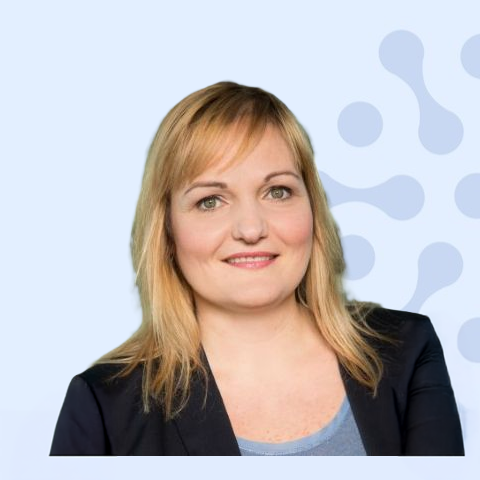
Dr. Marija Radić is a senior expert in digital health, data economy, and healthcare innovation. She currently serves as Managing Director of Competence Center Care Coordination GmbH and as Senior Scientist for Digital Health at Helmholtz-Zentrum Dresden-Rossendorf. Previously, she held leading roles at Fraunhofer IMW, where she built and led interdisciplinary research programs in digital health. Her work focuses on data sovereignty, AI-driven healthcare solutions, and sustainable business models, with more than 50 scientific publications in international journals and conferences proceedings.
