
This work package establishes the project’s governance framework: the coordinator (FSE) oversees day-to-day administration, budget, and legal compliance, and scientific stewardship - organizing meetings, managing contracts, and ensuring that deliverables, milestones, and reports are delivered on time. It also sets up internal communication channels to keep all partners aligned, while implementing a proactive risk-management cycle (identification, analysis, mitigation, control) to address emerging threats. A data management plan is created and maintained to ensure consistency, accessibility, and integrity of project data across all work packages (WP1 - WP10). Finally, the setup of a scientific advisory board and ethics comittee ensures continuous scientific guidance and guarantees to uphold ethical standards throughout the project lifecycle.
Current and future CAR-T care processes are mapped, analyzed and enhanced under real-world constraints. Through expert interviews, and KPI definition, partners will build detailed process diagrams and quantitative baselines to inform discrete-event simulation models. These models will be calibrated, used for “what-if” analyses to develop resource concepts (layout, staffing, logistics) and contribute to the performance evaluation in WP3. In parallel, qualitative co-creation workshops with clinicians ensure that user insights drive the design of optimized workflows, SOPs, and training materials.
A PESTEL analysis and expert interviews map out all external influences and key actors to pinpoint the political, economic, social and regulatory factors that will shape technology adoption. It then translates stakeholder insights into prioritized technical and usability requirements via targeted questionnaires, ensuring the device meets real-world needs. Building on this, acceptance studies systematically gather and analyze stakeholders feedback to establish clear criteria for end-user buy-in, and a comprehensive cost-effectiveness model compares point-of-care versus conventional CAR-T therapies (including QALYs, long-term follow-ups, Monte Carlo sensitivity analysis, and workflow-driven cost inputs) to guide strategic decision-making.
WP4 defines and validates patient eligibility criteria to identify new cohorts who stand to benefit from the modular CAR-T device, leveraging clinical expertise and data analytics to model anticipated outcomes. A comprehensive market and competitor analysis maps current trends, barriers to entry, and growth projections, informing optimal positioning within healthcare systems. Finally, insights from WP2 are used for exploitation and sustainability strategies that outline clear commercialization pathways, partner engagement, and scalable roll-out plans to ensure long-term integration and impact of the innovation.
A robust regulatory roadmap is crafted for both the CGT proof-of-concept platform and the modular CAR-T procedure. Early engagement with Notified Bodies and competent authorities ensures that device classification, pre-clinical testing, and evolving regulations are addressed in real time. A detailed European regulatory landscape analysis across EU countries (starting with Germany, Spain) informs consultation with TÜV, PEI, EMA, and other agencies, while comprehensive GMP documentation - including validation plans, risk assessments, and supplier qualification - lays the groundwork for compliant manufacturing in WP6.
Refining and validating the consumable cassette and core instrument to meet GMP specifications for on-site CAR-T production is performed in this working package: partners will iterate on the Point-of-Care (PoC) - cell and gene therapy cassette design (affinity capture, washing, concentration) and verify cell-isolation performance (purity, viability, yield) across multiple donor samples. Standardized quality-control cartridges and protocols will be developed to automate cell counts, viability checks, and contamination assays, by stakeholder feedback from WP8. Finally, a Digital Twin will integrate process and quality control data into hospital EHR/LIMS systems, enabling real-time interoperability and streamlined clinical workflows.
Same-day CAR-T production is established and refined through the comparison of novel vector and gene-editing strategies with classical methods. Both processes are then standardized to ensure consistent, clinical-scale use. It develops cutting-edge analytical assays - leveraging CRISPR off-target profiling, 3D ex vivo efficacy screens, and cytokine-release monitoring - to qualify edited cells for safety and potency. Finally, it conducts paired comparisons of the new rapid workflow versus traditional ex vivo culture to demonstrate equivalence or superiority in product quality.
Simulated onboarding workflows in hospital settings serve to pilot the point-of-care CAR-T platform, while also generating SOPs, training materials, and quality-management documents to assess personnel, infrastructure, and documentation requirements. Guided by insights from WP2 and WP3, this WP then conducts dry runs across partner sites, gathering usability feedback to iteratively refine device deployment and clinical processes while preparing for a clinical trial. Finally, interoperability tests validate data interfaces between the device, digital twin, and hospital IT systems, and a clinical study protocol is drafted alongside a comprehensive final report outlining logistics, user insights, and regulatory considerations.
To share EASYGEN’s findings with scientific, clinical, and public audiences the team develops a dynamic dissemination and communication strategy – featuring a unified brand identity, website, social media presence and toolkit for presentations and press releases. It conducts a literature review on CAR-T patient quality of life (QoL), including a patient questionnaire to assess patient-reported burden to access CAR-T cell therapy, to inform targeted messaging and convenes roundtable workshops with patient advocacy groups to co-create educational resources and a white paper on lived-experience insights. Ongoing stakeholder networking ensures that healthcare providers and patients are actively engaged throughout the project’s lifespan.
To ensure full compliance with applicable laws, regulations, and best practices, this working package defines an ethical framework and oversight structure guiding all research and device development activities. An ethics committee will be convened to review protocols, informed-consent materials, data-protection measures (e.g., GDPR compliance), and patient-safety procedures, providing guidance and approval at key milestones. Continuous monitoring and reporting mechanisms will be implemented to address any emerging ethical issues throughout the project lifecycle.
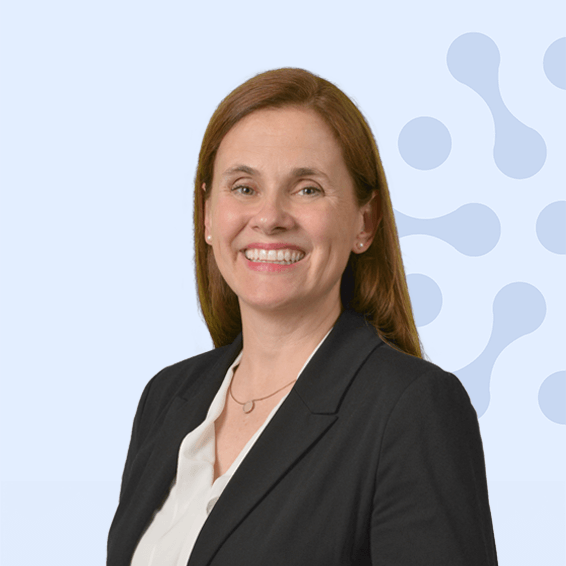

Sonja leads the EASYGEN Consortium as principal investigator. She is the Vice President and Head of the Research Office at Fresenius, bringing over 25 years of leadership experience in academia, biotech, medtech, and the pharmaceutical industry. She has held diverse senior roles at Fresenius Medical Care, from biomedical research to scientific affairs and global medical strategy. Her expertise spans medical device R&D, bioinformatics, and translational science, with a focus on cell and gene therapy innovation. She is known for her strategic mindset, cross-functional leadership, and commitment to impactful medical progress. With a doctorate in molecular genetics and an MBA in Biotech, Pharma & MedTech Management, she merges scientific rigor with business-driven healthcare innovation.
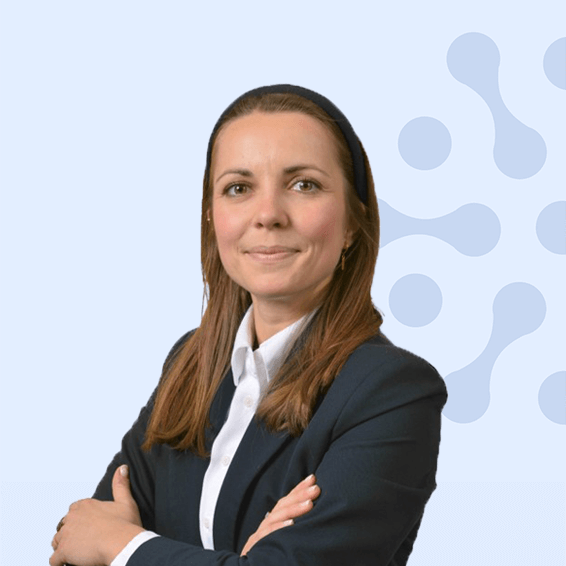
Rebecca Scheiwe is Senior Manager of Academic Collaboration at Fresenius, based in Bad Homburg. With a Master’s in Biochemistry from Goethe University Frankfurt, she leads partnerships between academia, industry, and healthcare to drive R&D and technology transfer. In the EASYGEN consortium, she leads Work Package 4 – Patient-centric market readiness and sustainability, focusing on patient eligibility for CAR-T therapies, market analysis, and strategies to ensure sustainable integration and exploitation of project innovations in healthcare systems.

Dominik is an innovation management specialist active in the biomedicine and med-tech sectors. He supports digital health and med-tech projects as a thought and action partner, excelling in ideation, stakeholder alignment, and strategic implementation. Skilled in driving early-stage innovation, Dominik merges technical understanding with business acumen to advance product development, regulatory readiness, and market adoption. His approach combines creative problem-solving with strong collaboration and communication across interdisciplinary teams.

Vivian Längst is a biomedicine-trained project and innovation professional active at the interface of research, healthcare, and industry. As Junior Manager Scientific Project Coordination at Fresenius, she supports international research and innovation initiatives through stakeholder engagement, operational management, and quality-driven project execution. Within the EASYGEN consortium, she contributes to the coordination and implementation of activities aimed at improving access to advanced cell and gene therapies across Europe. Combining scientific expertise with strong communication, innovation, and organizational skills, Vivian helps translate ambitious research goals into impactful and sustainable outcomes.
