
Current and future CAR-T care processes are mapped, analyzed and enhanced under real-world constraints. Through expert interviews, and KPI definition, partners will build detailed process diagrams and quantitative baselines to inform discrete-event simulation models. These models will be calibrated, used for “what-if” analyses to develop resource concepts (layout, staffing, logistics) and contribute to the performance evaluation in WP3. In parallel, qualitative co-creation workshops with clinicians ensure that user insights drive the design of optimized workflows, SOPs, and training materials.
A PESTEL analysis and expert interviews map out all external influences and key actors to pinpoint the political, economic, social and regulatory factors that will shape technology adoption. It then translates stakeholder insights into prioritized technical and usability requirements via targeted questionnaires, ensuring the device meets real-world needs. Building on this, acceptance studies systematically gather and analyze stakeholders feedback to establish clear criteria for end-user buy-in, and a comprehensive cost-effectiveness model compares point-of-care versus conventional CAR-T therapies (including QALYs, long-term follow-ups, Monte Carlo sensitivity analysis, and workflow-driven cost inputs) to guide strategic decision-making.
A robust regulatory roadmap is crafted for both the CGT proof-of-concept platform and the modular CAR-T procedure. Early engagement with Notified Bodies and competent authorities ensures that device classification, pre-clinical testing, and evolving regulations are addressed in real time. A detailed European regulatory landscape analysis across EU countries (starting with Germany, Spain) informs consultation with TÜV, PEI, EMA, and other agencies, while comprehensive GMP documentation - including validation plans, risk assessments, and supplier qualification - lays the groundwork for compliant manufacturing in WP6.
Refining and validating the consumable cassette and core instrument to meet GMP specifications for on-site CAR-T production is performed in this working package: partners will iterate on the Point-of-Care (PoC) - cell and gene therapy cassette design (affinity capture, washing, concentration) and verify cell-isolation performance (purity, viability, yield) across multiple donor samples. Standardized quality-control cartridges and protocols will be developed to automate cell counts, viability checks, and contamination assays, by stakeholder feedback from WP8. Finally, a Digital Twin will integrate process and quality control data into hospital EHR/LIMS systems, enabling real-time interoperability and streamlined clinical workflows.
Simulated onboarding workflows in hospital settings serve to pilot the point-of-care CAR-T platform, while also generating SOPs, training materials, and quality-management documents to assess personnel, infrastructure, and documentation requirements. Guided by insights from WP2 and WP3, this WP then conducts dry runs across partner sites, gathering usability feedback to iteratively refine device deployment and clinical processes while preparing for a clinical trial. Finally, interoperability tests validate data interfaces between the device, digital twin, and hospital IT systems, and a clinical study protocol is drafted alongside a comprehensive final report outlining logistics, user insights, and regulatory considerations.
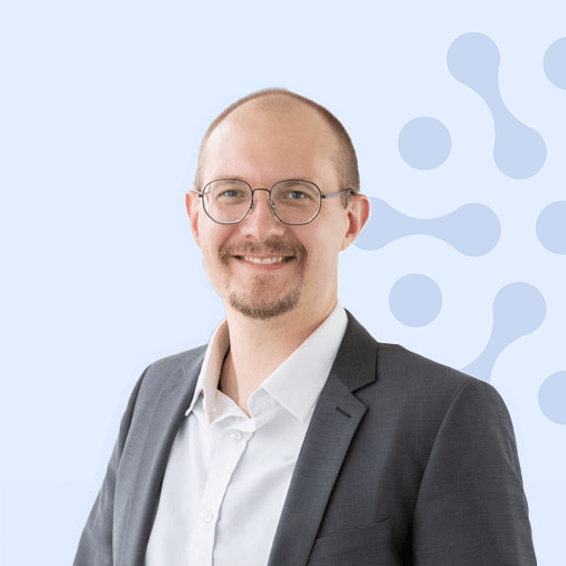

Patrick is the Head of the Digital Innovation Design department at Fraunhofer IESE in Kaiserslautern. Since 2017, he has led numerous cross-domain digital transformation projects in smart mobility, infrastructure, agriculture, and smart cities. A specialist in requirements engineering, user experience, and creativity-driven innovation, Patrick brings tailored digital solutions to industrial and research clients. His thought leadership on AI, digital ecosystems, and innovation engineering shapes both practice and public discourse in Germany.

Stephan studied Biophysics at Humboldt University of Berlin with a focus on Systems Biology. Following additional training in data science, he joined the Digital Health Department at Fraunhofer IESE, where he develops solutions to enhancethe interoperability of digital healthcare systems. With his expertise, Stephan supports seamless communication between bedside devices and systems relevant to hospital workflows.

Eduard is a Senior Requirements Engineer and Project Manager at Fraunhofer IESE, where he focuses on digital design for complex systems and sustainability challenges. He leads initiatives in Crowd-Based Requirements Engineering and advises on digital data platforms across disciplines, including for agriculture. Eduard holds a PhD in Computer Science from the Utrecht University, where he explored the derivation of requirements from online user feedback.

Jean is a Data Scientist in the Digital Health Engineering department at Fraunhofer IESE, where he has worked since early 2024. He holds a Bachelor's degree in Bioinformatics from LMU/TU Munich and a Master’s degree (2023) from FU Berlin, specializing in Data Science. Prior to joining IESE, Jean worked as a DevOps Engineer. He produces research and blog articles on digital health topics—suchas FHIR/ISiK interoperability and digital biomarkers/patient twins—bridging bioinformatics, data engineering, and healthcare innovation.

Jill-Valerie is a Senior User Experience Designer & Product Owner at Fraunhofer IESE since 2017, based in Darmstadt. She holds a Master’s degree in Media Direction (Interaction Design) from Hochschule Darmstadt (2012). Jill leads agile, platform-centered projects in digital health, combining UX best practices including Lean UX and Design Sprints to craft intuitive web and app experiences. An experienced presenter at REFSQ conferences, she bridges interdisciplinary teams through creativity, user-centered design, and human-centric innovation.

Theresa is the Department Head of Digital Health Engineering at Fraunhofer IESE, where she leads interdisciplinary research on innovative digital health solutions,artificial intelligence, and interoperability for healthcare. With over ten years of experience in medical research, she has worked on diagnostic assay development and cancer therapies, including liquid biopsy techniques for circulating tumor cell analysis. She has held various postdoctoral positions incancer research, including work funded by the Marie Curie Fellowship, and has been involved in health technology assessment for medicinal products, particularly in immune-mediated and orphan diseases.

Siwara is working at Fraunhofer IESE since 2015, serving as a business area manager for embedded systems as well as a project lead. She has many years of experience in developing and integrating Industry 4.0 solutions with a focus on digital twins, interoperability, data spaces, and distributed software systems. In her work, she places particular emphasis on the user perspective and combines technical excellence with practical implementability in digital transformation.
